
Creating Flow and Comfort: Interior Design Tips for Efficient Spatial Arrangements
We believe your home should be your sanctuary. As Ogden’s premier destination for curated home furnishings and interior design, we are passionate about helping you create spaces that are not only beautiful but also highly functional. The key to achieving this balance lies in thoughtful spatial arrangement. In this post, we'll guide you through the art of furniture placement, ensuring your home feels harmonious, inviting, and functional.
Mastering the Art of Flow and Function
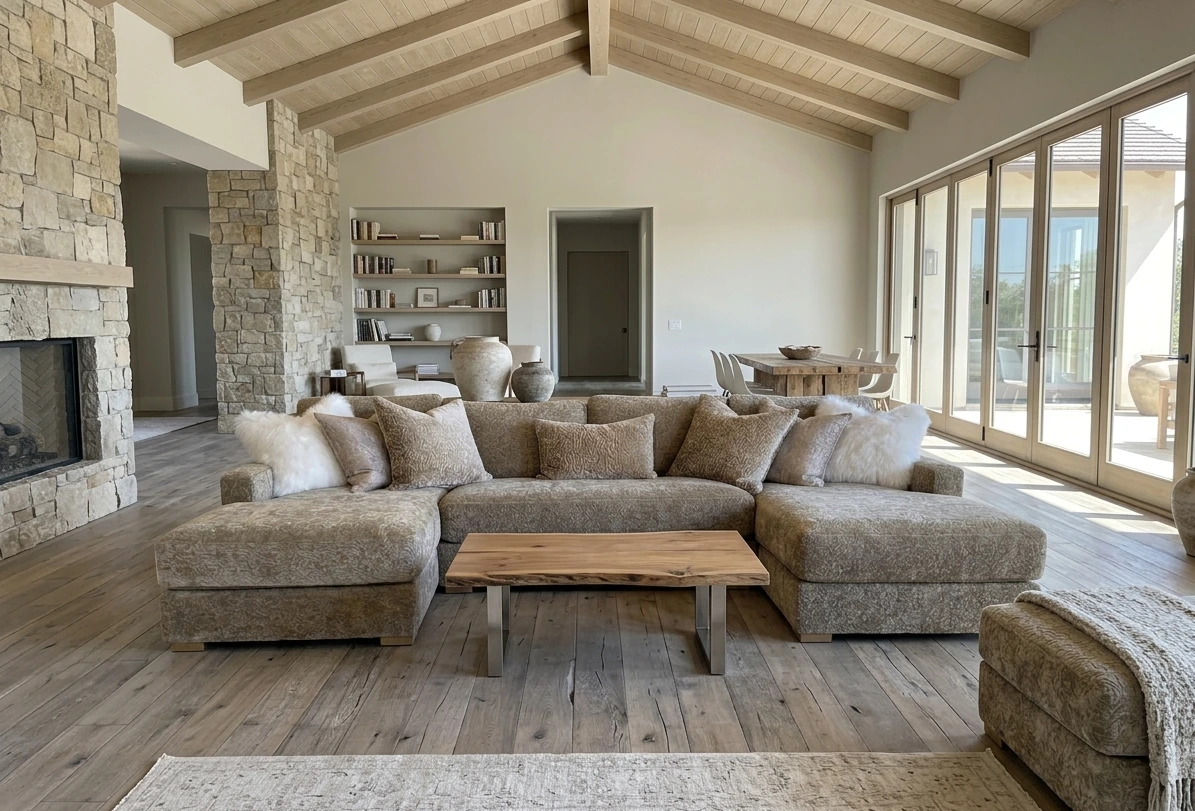
Spatial arrangement in your living room isn't just about aesthetics; it's about creating a space that works for you and your family. The correct furniture placement can significantly impact the flow, function, and overall comfort of your home. A well-arranged room can make it easy to move around, encourage conversation, and create distinct zones for different activities.
Understanding Flow and Function:
Flow: This refers to the natural pathway of movement through a space. It’s about how easily and intuitively you can walk from one point to another without obstruction.
Functionality: This is about how you use your living room. Is it primarily for relaxing and watching TV? Do you host large gatherings? Is there a dedicated spot for reading? Your arrangement must reflect these uses.
The Gold Standard: Key Interior Design Measurements
While design is an art, successful spatial planning is guided by precise measurements. These numerical guidelines ensure that your room not only looks good on paper but also works beautifully in real life. Ignoring these standard dimensions can lead to cramped walkways, inaccessible areas, and a feeling of clutter or awkwardness.
Here are the essential measurements to follow when arranging your living and dining areas:
1. Minimum Walkway Space: 36 Inches
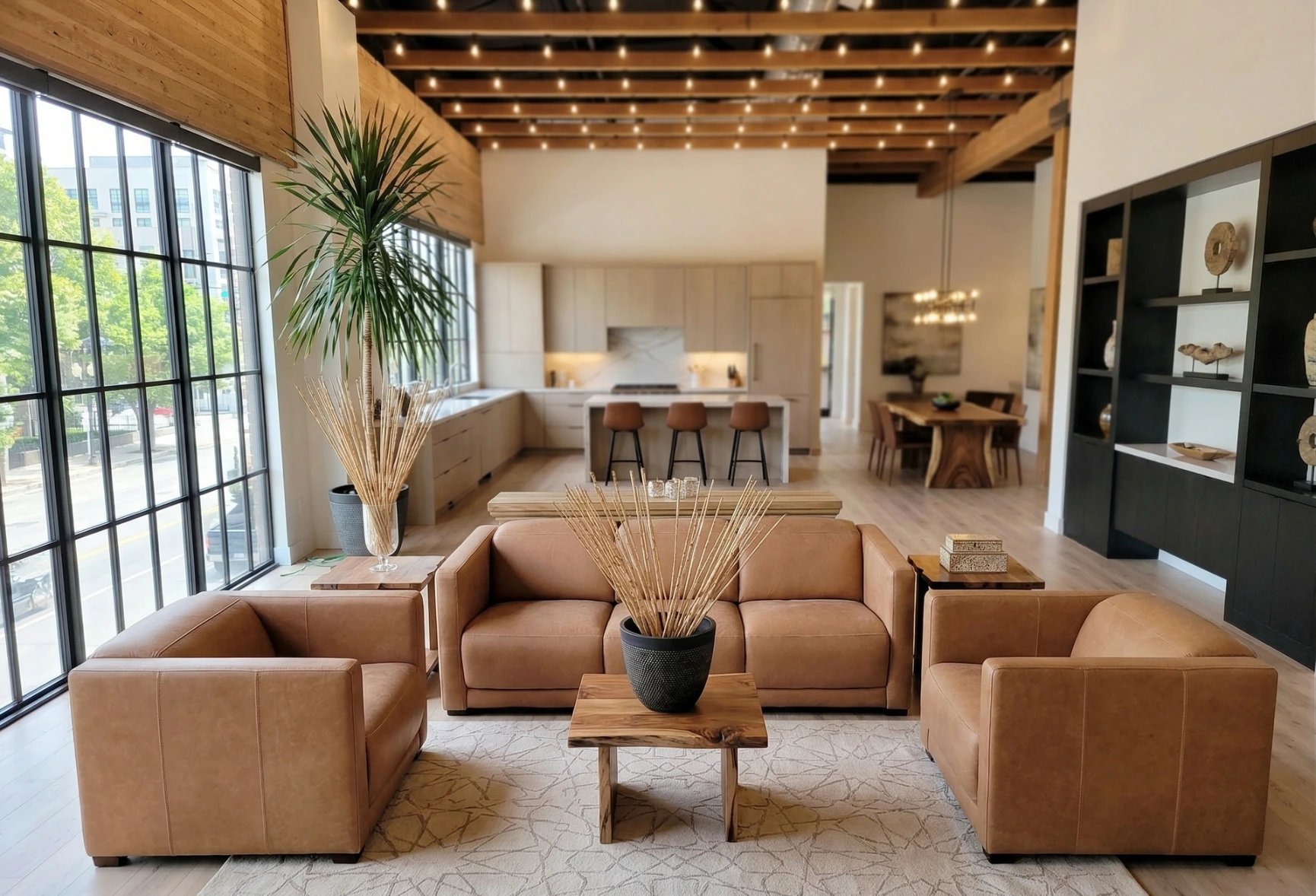
The most critical measurement for proper flow is maintaining a minimum walkway. This is the clear path you need to navigate the room without feeling squished or forced to squeeze past furniture. Think about paths to doorways, hallways, and across the room. Aim for a 36-inch clearance. You can sometimes get away with 30 inches in tight spots, but 3 feet is the professional standard for comfort. The easiest way to measure for furniture is to measure the room, subtract 36 inches for necessary walkways and principle traffic flow, then determine the area available for furniture. Consider various options such as a sofa and two chairs, an L-shape sectional or a U-shape sectional with a chaise or even a double chaise sectional. In some spaces, a four- or five-seater sofa is the perfect space saver. Tape off various options with painter's tape to get a feel For the space in each configuration in order to determine the best fit for the space and your lifestyle. If you have chairs that are easy to move, try them in different arrangements in order to visualize the space.
2. Between Coffee Table and Sofa: 18 Inches
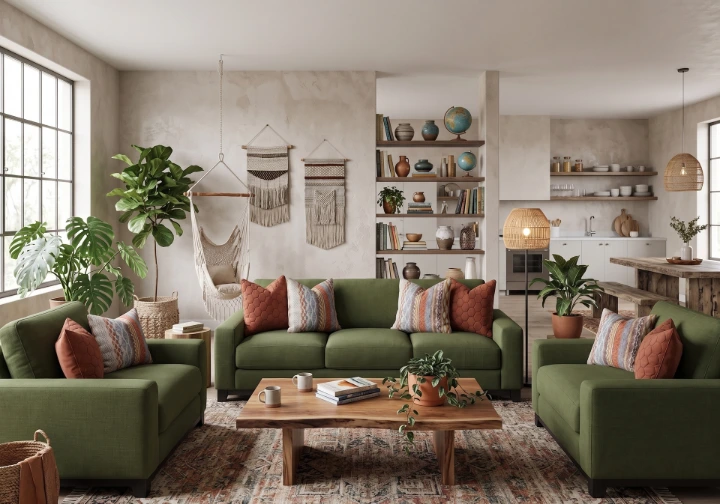
Getting this distance right is crucial for both comfort and accessibility. The ideal placement for your coffee table is typically 18 inches from the edge of your sofa. This distance is:
Close enough to comfortably rest your feet or place a drink/book without getting up.
Far enough that you can comfortably stand up from the sofa or walk past it without knocking your shins.
If you have a large ottoman, consider pulling it an extra inch or two away to make sure there's enough room to walk around it. For very small tables and smaller sofas, 16 inches can suffice, but 18 inches is generally optimal.
3. Dining Chairs Space Requirement: 30 to 36 inches
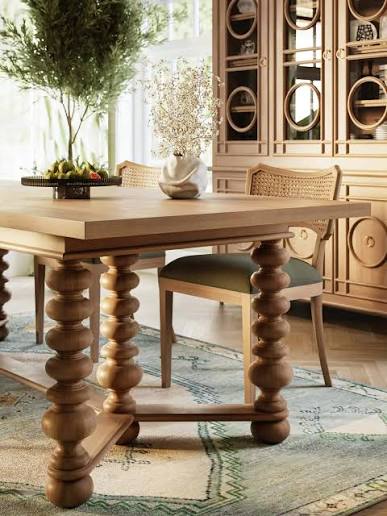
Creating a comfortable dining experience involves more than just selecting the right table. You must allow ample space behind the dining chairs for people to get in and out of their seats and to walk around the table while others are seated. Standard advice is to allow at least 3 feet (36 inches) of clearance from the edge of the table to the nearest wall or large piece of furniture. This measurement is necessary for:
Comfortably pushing your chair back to stand up.
A waiter or family member to serve or clear the table without a seated guest feeling crowded.
For a tighter fit, you might use 30 inches, but 36 inches ensures your dining room feels spacious and functional. If there are walls on either side, certain spaces may rapidly compress once 36 inches is subtracted, and if a door to the exterior needs to be considered, the space can shrink even further. Measure Carefully! An easy rule of thumb is to measure the width, then subtract 60 inches minimum, and the remaining measurement is the maximum table size.
Choosing the Right Furniture
Selecting the appropriate furniture sizes and shapes is the next piece of the puzzle. An oversized sectional can overwhelm a small living room, making it feel cramped regardless of the placement. Conversely, small furniture in a large room will leave it feeling sparse and disconnected.
How We Can Help at Nest Furnishings
Achieving the perfect spatial arrangement can be daunting, but you don't have to do it alone. Our team of experienced interior designers at Nest Furnishings in Ogden, Utah, is here to guide you. We can help you:
Create floor plans: We’ll map out your space and experiment with different furniture configurations.
Select the perfect pieces: We’ll help you choose furniture that is scaled to your room and meets your functional needs.
Offer customized recommendations: We’ll provide tailored design advice based on your unique style and requirements.
Visit us today! Explore our wide selection of living room and dining room furniture at our store in the heart of Ogden. For more inspiration and to learn more about our design services, please visit our website at www.thenestfurnishings.com
Let Nest Furnishings help you create a home that flows naturally!